
Understanding the Bradford Assay
Protein Quantification by UV-Vis Spectroscopy

What Is the Bradford Assay?
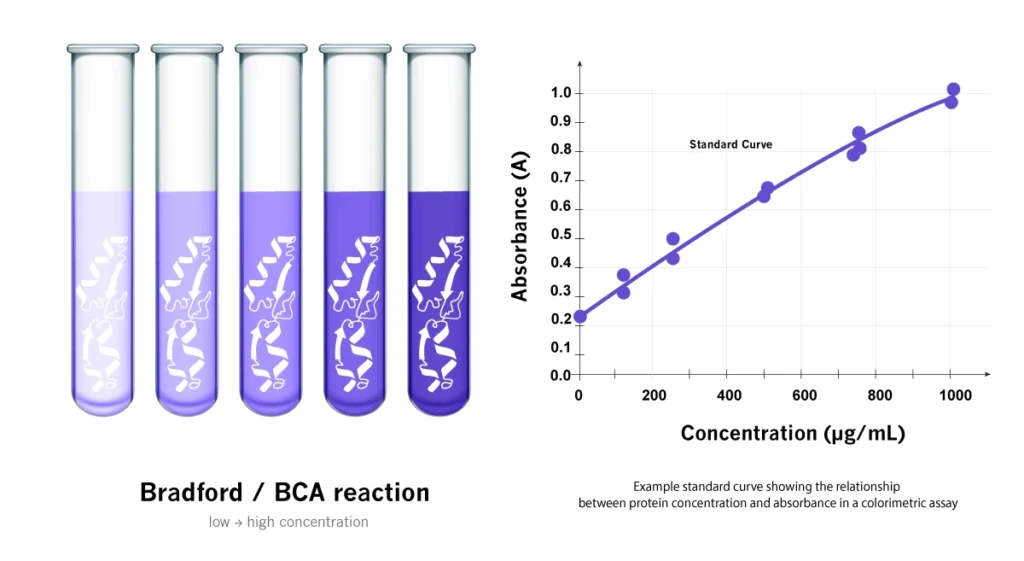
The Bradford assay is a spectrophotometric method used to estimate total protein concentration in solution. Instead of measuring the protein’s natural absorbance directly, the assay measures a color change caused by protein binding to a dye.
The dye used is Coomassie Brilliant Blue. Under acidic conditions, this dye shifts form when it binds to proteins. The unbound dye is more reddish-brown, while the protein-bound form becomes blue. This blue protein-dye complex absorbs strongly around 590–595 nm, making it easy to detect with a UV/Vis spectrophotometer.
In simple terms:
More protein → more dye binding → stronger blue color → higher absorbance at 595 nm
Why Does the Dye Change Color?
Coomassie Brilliant Blue can exist in different charged forms. In the Bradford assay environment, protein binding stabilizes the blue anionic form of the dye. This causes a measurable absorbance shift.
The dye interacts especially with basic and aromatic amino acid residues, meaning the response can vary somewhat between different proteins. For this reason, Bradford assays are usually interpreted using a standard curve made from a known protein standard, commonly bovine serum albumin, or BSA.
Why Use a Standard Curve?
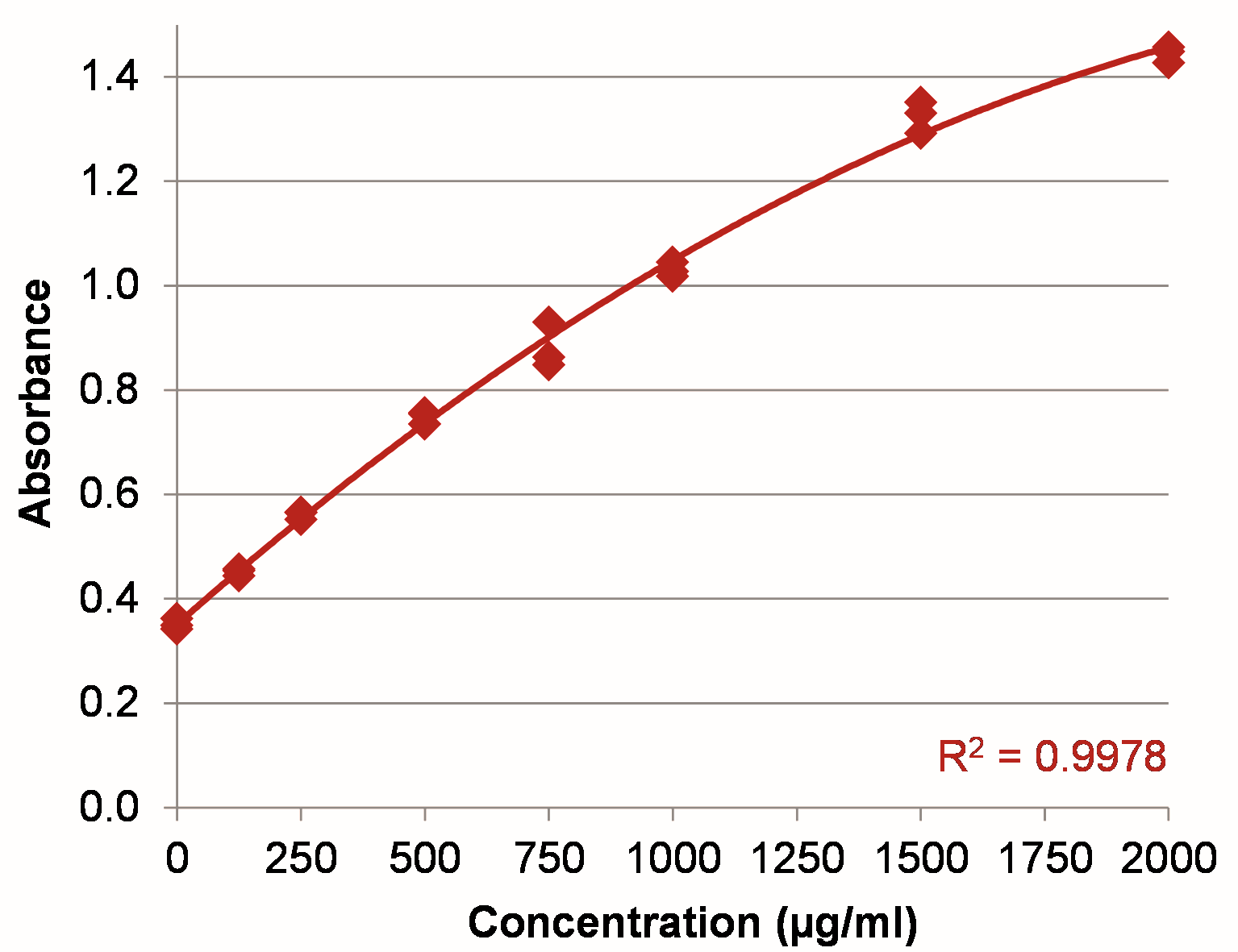
Unlike direct A280 measurements, where absorbance can sometimes be converted directly into concentration using an extinction coefficient, the Bradford assay compares unknown samples against standards.
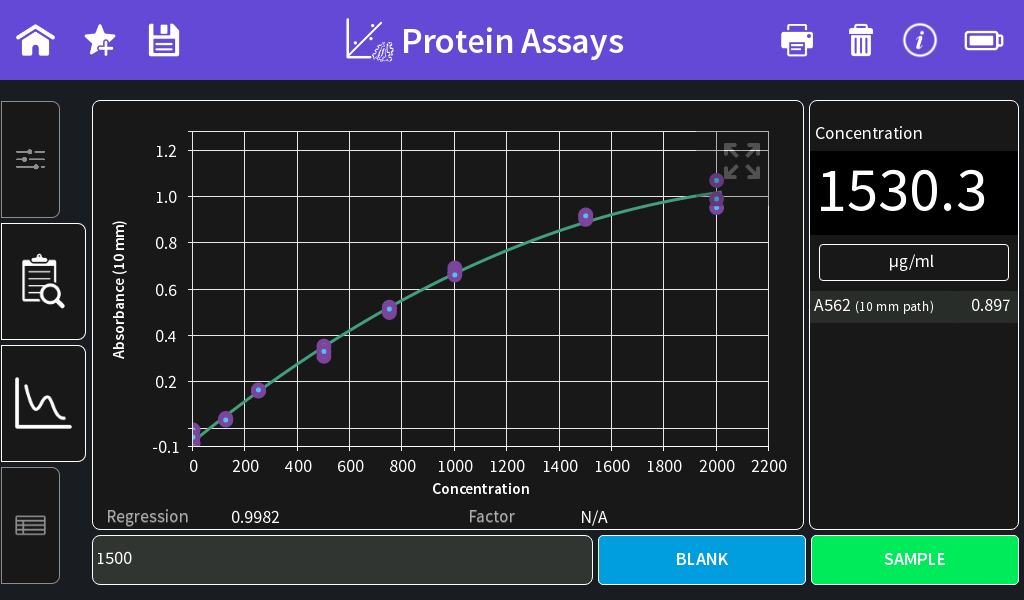
A set of known protein concentrations is measured first. These measurements create a standard curve showing the relationship between absorbance at 595 nm and protein concentration. The absorbance of an unknown sample is then matched to this curve to estimate its concentration.
Bradford Assay vs. Direct UV Measurement at 280 nm
- The protein is relatively pure
- The buffer does not absorb at 280 nm
- The protein contains enough tryptophan and tyrosine
- Nucleic acids or other UV-absorbing contaminants are minimal


When Is the Bradford Assay Especially Useful?
- Protein samples in buffers that interfere with A280 measurement
- Crude or partially purified protein preparations
- Samples with unknown extinction coefficients
- Proteins with low aromatic amino acid content
- Workflows where total protein concentration is more important than protein-specific absorbance
The method is rapid, sensitive, and compatible with standard UV/Vis spectrophotometers. In microvolume formats, it also helps conserve sample, which is important when protein material is limited.


What Researchers Should Keep in Mind
The Bradford assay is powerful, but it is not universal. Different proteins may bind the dye differently, and some buffer components can interfere with the assay chemistry. The useful concentration range also depends on the instrument, assay format, and reagent system.
For best results, researchers should choose a standard protein that reasonably matches their sample type and make sure unknown samples fall within the reliable range of the standard curve.
Microvolume Bradford Measurements
