
Protein Quantification
Concentration • Purity • Quality
Protein Quantification Using UV Spectroscopy
Protein quantification is an essential step in many biochemical and molecular biology workflows. Accurate determination of protein concentration is critical for enzyme studies, protein expression analysis, and a wide range of downstream applications.
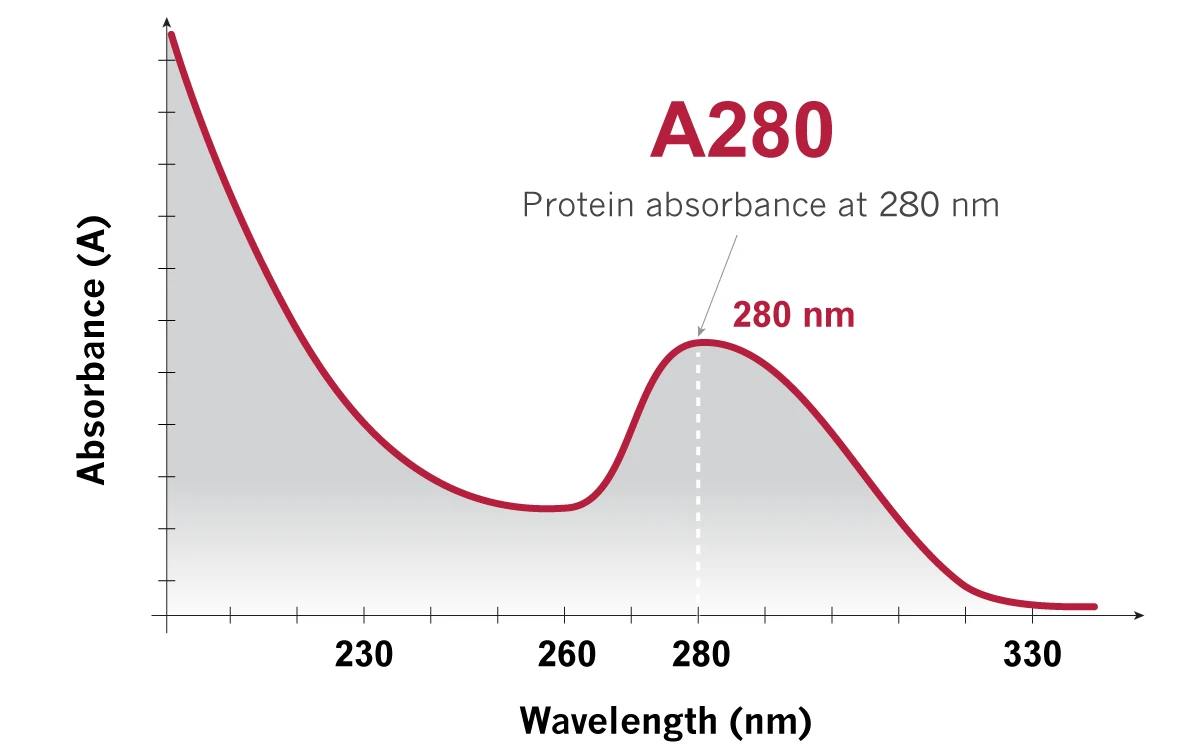
UV-Vis spectrophotometry enables rapid protein quantification by measuring absorbance at 280 nm, providing a convenient method for concentration determination without additional reagents.
This page explains how protein quantification using UV spectroscopy works, what A280 means, what can affect accuracy, and how UV-Vis measurements fit into a typical laboratory workflow.
How Protein Quantification Works, Protein Concentration Formula
Why Protein Quantification Matters
- Ensure consistent input for assays
- Normalize samples for electrophoresis and enzymatic studies
- Evaluate protein expression levels
- Prepare samples for structural or functional analysis
- Reduce variability in experimental workflows
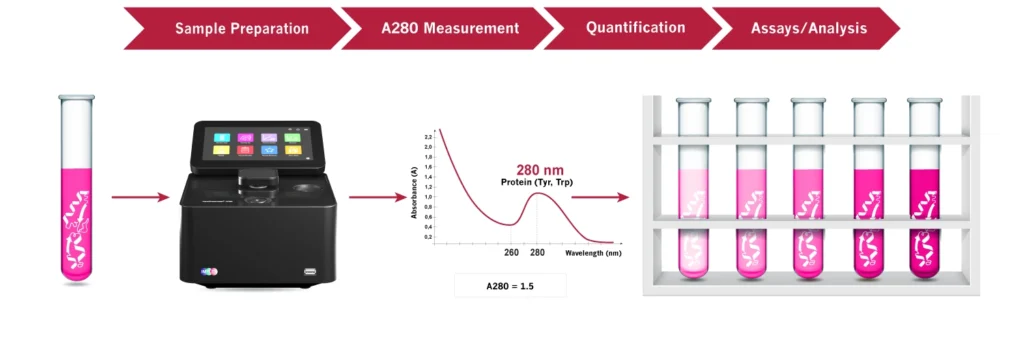
Typical protein measurement workflow from sample preparation to A280 measurement and downstream applications such as enzyme assays and protein analysis.
How Protein Quantification Works in UV Spectroscopy
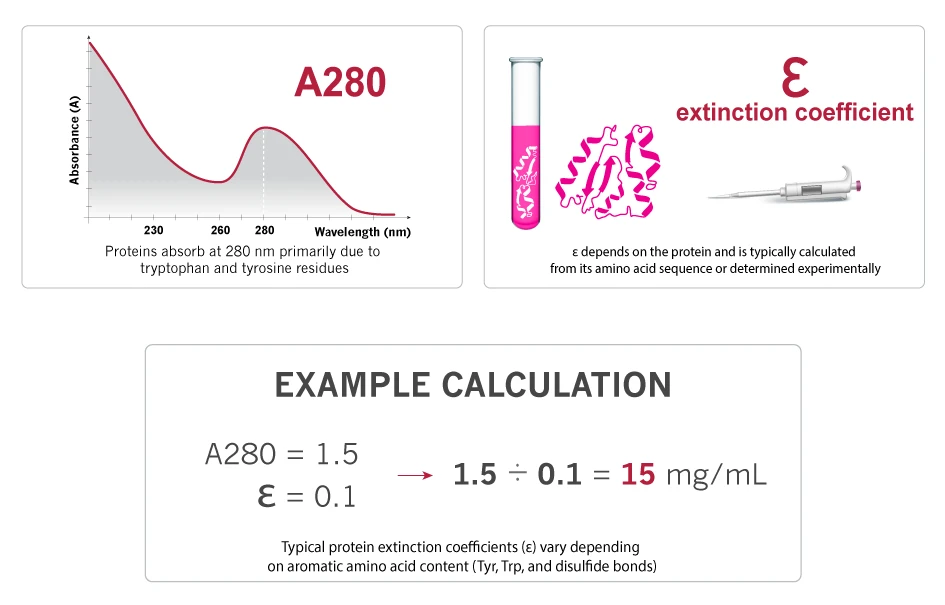
Proteins absorb ultraviolet light primarily at 280 nm due to the presence of aromatic amino acids such as tryptophan and tyrosine. The absorbance at this wavelength is proportional to protein concentration.
Unlike nucleic acids, protein quantification using UV spectroscopy depends on the specific extinction coefficient of the protein, which varies based on its amino acid composition.

What Is A280?
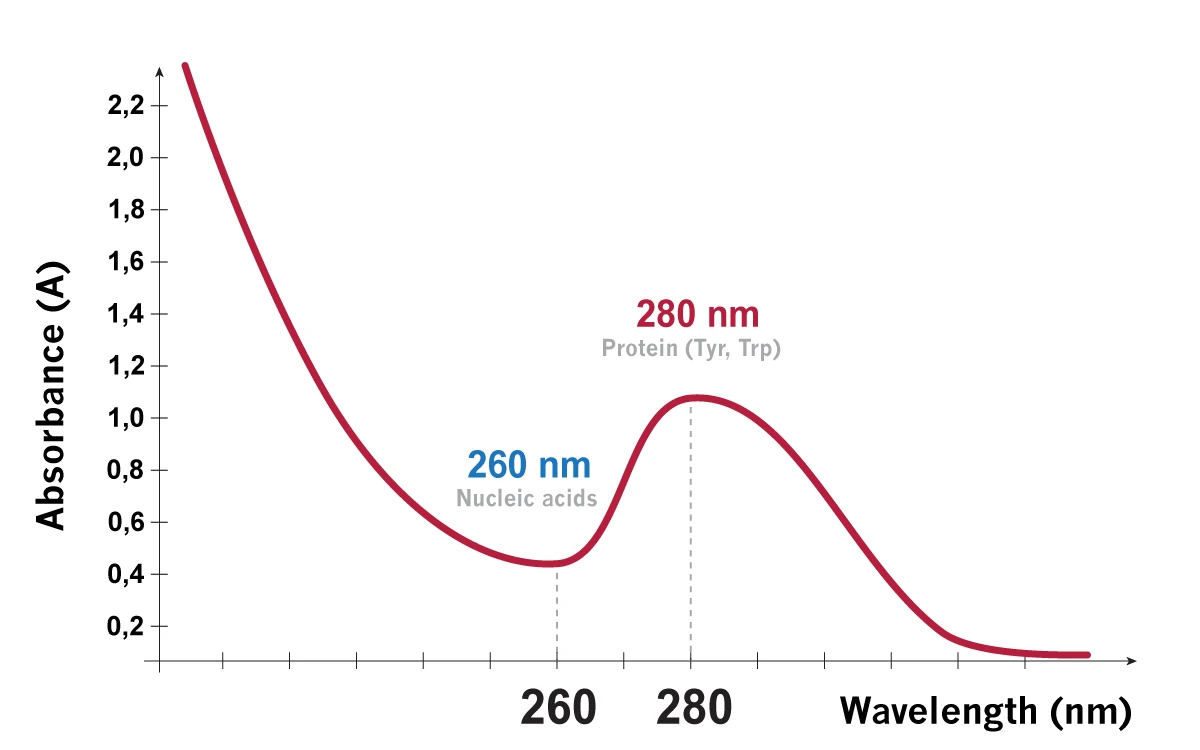
UV absorbance profile highlighting 230 nm (nucleic acids), and 280 nm (proteins).
Protein Concentration Calculation
Protein concentration is determined from absorbance at 280 nm using the Beer-Lambert law.
Unlike nucleic acid quantification, protein concentration cannot be calculated using a universal conversion factor. Instead, the extinction coefficient of the specific protein must be used.
Protein (mg/mL) = A280 / extinction coefficient
The extinction coefficient depends on the amino acid composition of the protein and is typically calculated from its sequence or determined experimentally.
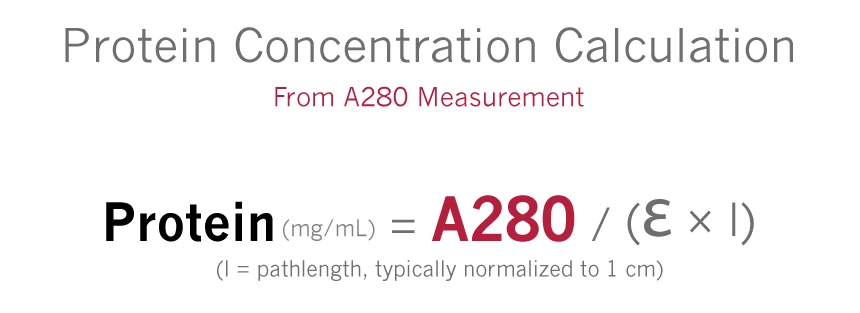


Protein concentration is calculated from A280 using extinction coefficient based on the Beer-Lambert law.
ε depends on amino acid composition (Tyr, Trp, disulfide bonds)
Assessing Protein Sample Purity with UV Absorbance Ratios
260/280 Ratio
The 260/280 ratio can help detect nucleic acid contamination in protein samples. Nucleic acids absorb strongly at 260 nm, while proteins absorb at 280 nm. For relatively pure protein samples, the 260/280 ratio is typically around 0.5 to 0.7, depending on protein composition. A higher ratio may suggest:- DNA or RNA contamination
- Incomplete purification
- Sample carryover from extraction steps
260/230 Ratio
The 260/230 ratio can indicate the presence of contaminants that absorb at lower UV wavelengths, such as:- Salts and buffer components
- Chaotropic agents (e.g., guanidine)
- Detergents or residual reagents
Important Consideration
When UV Spectroscopy Is Especially Useful for Protein Analysis
- Fast results without reagent preparation
- Rapid concentration measurement using A280
- A practical method for purified proteins with known extinction coefficients
- Microvolume measurement for limited samples
Limitations of UV-Based Protein Quantification
UV absorbance at 280 nm depends on the presence of aromatic amino acids such as tryptophan and tyrosine. Proteins with low levels of these residues may produce weak signals, leading to underestimation of concentration. In addition, accurate quantification requires a known or estimated extinction coefficient (ε), which may not always be available.
Applications That Commonly Require Protein Quantification
Protein quantification is commonly performed before:
- Enzyme activity assays
- Protein expression analysis
- SDS-PAGE and Western blot preparation
- Structural biology studies
- Antibody production
- Sample normalization and quality control
In all of these workflows, understanding protein concentration helps researchers prepare samples more consistently and reduce variability in downstream experiments.
Protein Quantification Using Colorimetric Assays
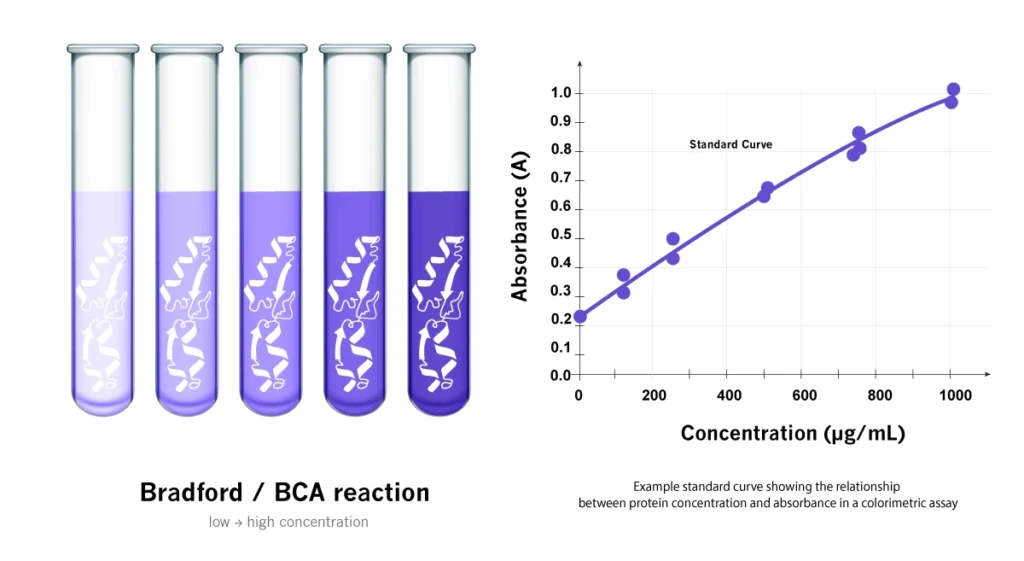
Colorimetric protein assays such as Bradford, BCA, and Lowry offer an alternative approach. These methods rely on chemical reactions between proteins and specific reagents that produce a color change proportional to protein concentration.
Because of these advantages, colorimetric assays are often used when higher sensitivity or greater specificity is required. However, they typically require additional preparation time compared to direct UV-based measurement.
- Use of reagents and incubation steps
- Higher sensitivity for low-concentration samples
- Reduced dependence on protein-specific extinction coefficients
- Improved tolerance to certain sample compositions
What Can Affect Measurement Accuracy?
Contaminants
Any compound that absorbs in the UV range can affect measurement accuracy. Nucleic acids, buffer components, detergents, and other UV-absorbing substances may alter absorbance values and lead to overestimation or underestimation of protein concentration.Improper Blanking
Accurate blanking is essential. The blank should closely match the buffer or solution in which the protein sample is dissolved. If the wrong blank is used, absorbance values may be shifted and results may become misleading.Protein Composition
Protein quantification at 280 nm depends on the presence of aromatic amino acids such as tryptophan and tyrosine. Proteins with low aromatic content may produce weaker absorbance signals, which can lead to underestimation if a general extinction coefficient is used.Low Concentration Samples
Very dilute protein samples can approach the lower detection limits of the instrument. In such cases, small absorbance fluctuations may have a greater impact on the reported result.Surface Contamination
In microvolume measurements, residual material on the measurement surface can influence subsequent readings. Clean measurement surfaces and careful sample handling are important for reproducible results.Microvolume vs Cuvette Protein Measurements
Microvolume Measurement
Microvolume spectrophotometry is especially useful when sample volume is limited. It allows researchers to measure protein concentration using very small sample amounts, often in the low microliter range, without needing disposable cuvettes. Common benefits include:- Minimal sample consumption
- Fast measurement
- Convenient routine QC
- Ideal for precious or limited protein samples
Cuvette Measurement
Cuvette-based measurement can be useful when larger sample volumes are available or when workflows benefit from a defined standard path length and traditional sample handling. It is also commonly used in protein assays such as Bradford, BCA, or Lowry. Common benefits include:- Familiar format for many laboratories
- Compatible with assay-based workflows
- Suitable for a wide range of protein concentrations
- Good fit for standard and educational workflows
Typical Workflow for Protein Quantification
1. Sample Preparation
The protein sample is prepared in an appropriate buffer. The sample should be well mixed to ensure homogeneity before measurement.2. Blank Measurement
A blank is measured using the same buffer or solvent used for the protein sample. This establishes the baseline for the analysis.3. Protein Measurement
The sample is measured, and the instrument records absorbance at 280 nm. Depending on the workflow, additional wavelengths or assay-based measurements may also be used.4. Concentration Review
The researcher evaluates the calculated protein concentration based on A280 and the extinction coefficient (if known), or based on a standard curve in assay-based methods.5. Normalization & QC
If the concentration is appropriate, the sample can be adjusted or diluted for downstream use. If not, further optimization, dilution, or alternative quantification methods may be considered.Applications of Protein Quantification
- Enzyme assays and activity studies
- Western blotting and immunoassays
- Protein purification and chromatography workflows
- Structural biology and biophysical analysis
- Sample normalization and preparation
- General laboratory quality control
Advantages of UV-Based Protein Quantification
- Fast measurement without reagents
- Direct concentration measurement using A280
- No consumables required
- Suitable for routine analysis of purified protein samples
Recommended Instruments for Protein Quantification
- Fast A280 measurements
- Reliable absorbance-based concentration analysis
- Low sample volume requirements
- Support for both direct UV and assay-based methods
- Clear data output for daily use
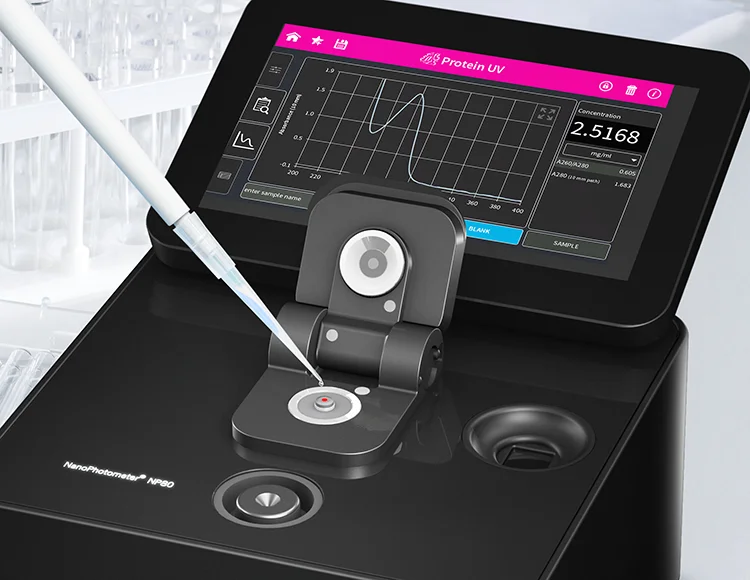
Fast, accurate protein quantification using microvolume UV-Vis spectrophotometer.