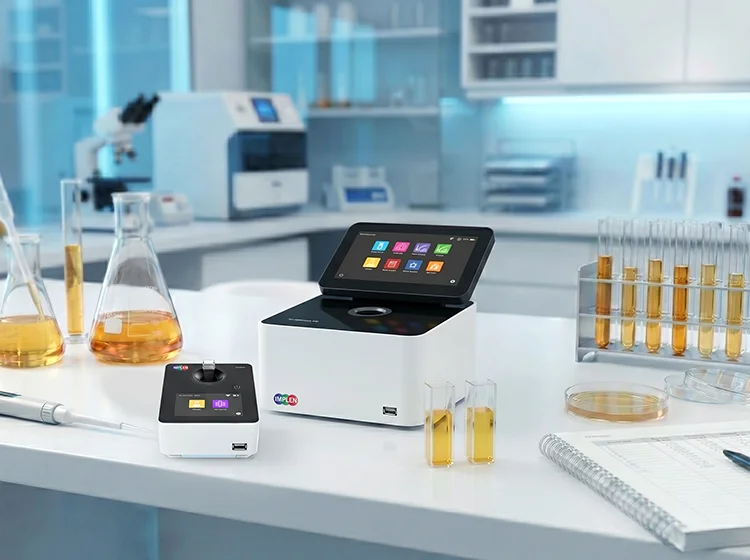
Cell Density, Bacterial Growth, Yeast Growth
OD600 Bacterial Cell Density Measurements
What is OD600?
- Monitor bacterial growth
- Determine cell density in liquid cultures
- Identify optimal harvesting or induction time
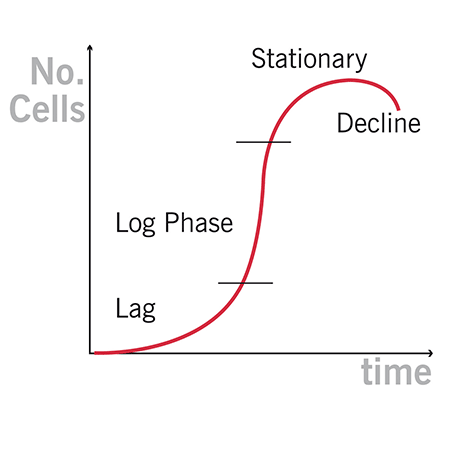
- Construct microbial growth curves

Why OD600 Measurements Matter
OD600 measurements play an important role in microbiology and cell culture workflows. Monitoring optical density helps researchers track microbial growth, identify optimal induction and harvesting points, and maintain reproducible experimental conditions.
Because OD600 measurements can be performed quickly and non-destructively, they are routinely used to monitor bacterial cultures throughout cloning, protein expression, fermentation, and routine laboratory workflows.
- Monitor bacterial and yeast growth in real time
- Determine optimal induction timing for protein expression
- Standardize inoculation density between experiments
- Generate reproducible microbial growth curves
- Track fermentation and culture health
- Improve consistency across microbiology workflows

How OD600 Measurements Work

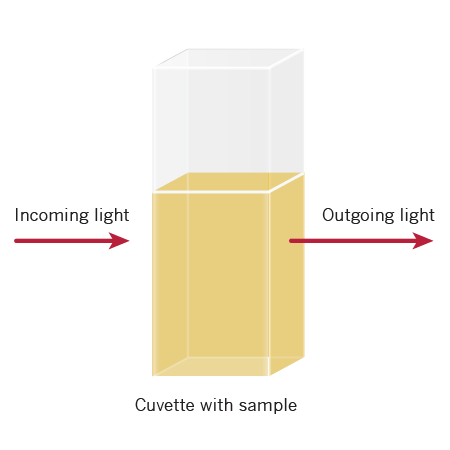
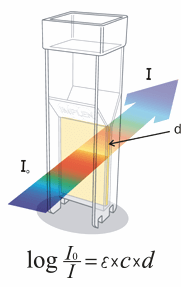
How OD600 Measurements Work (Beer-Lambert Law)


Common Applications of OD600 Measurements
- Monitoring bacterial growth
- Determining induction timing
- Tracking fermentation
- Standardizing inoculation density
- Monitoring yeast cultures
- Generating growth curves
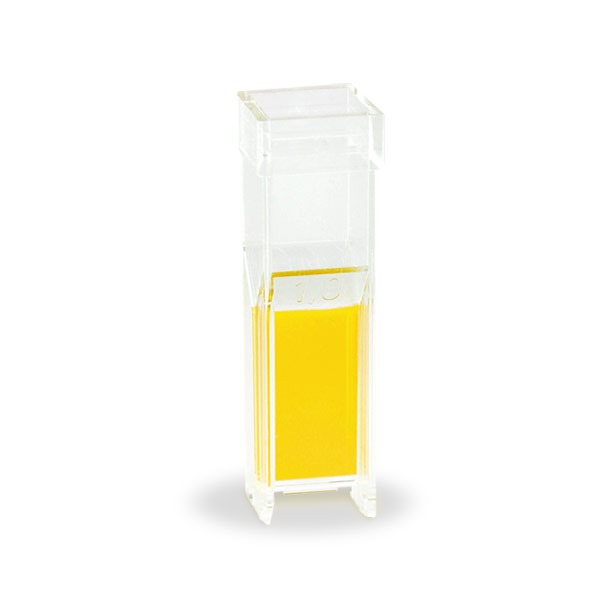
Use of Cuvettes for Reproducible Readings
The use of disposable cuvettes is recommended rather than micro/nano volume technologies (measurements in a drop) for optical density measurements of cell culture solutions. The amount of cells is reflected in the reading and the likelihood of fluctuating amount of cells in a drop from sample to sample can be considered as extremely significant.
It is therefore recommended to use cuvettes since the amount of error in a bigger volume is not as significant. The cuvette measurements provide a bigger average and therefore more reproducible readings. Also, to prevent the suspension settling too quickly and giving an OD reading that changes with time, glycerol should be added to the sample.
Why OD600 Readings Differ Between Spectrophotometers
For turbid samples such as cell cultures, the major contributor for the absorbance measured is light scattering and not the result of molecular absorption following the Beer-Lambert Law.
The measurements are therefore depending on the optical setup of the spectrophotometer (distance between the cell holder and instrument exit slit, monochromator optics, slit geometry, etc.), different instrument types will most likely tend to give different OD 600 readings for the same turbid sample.
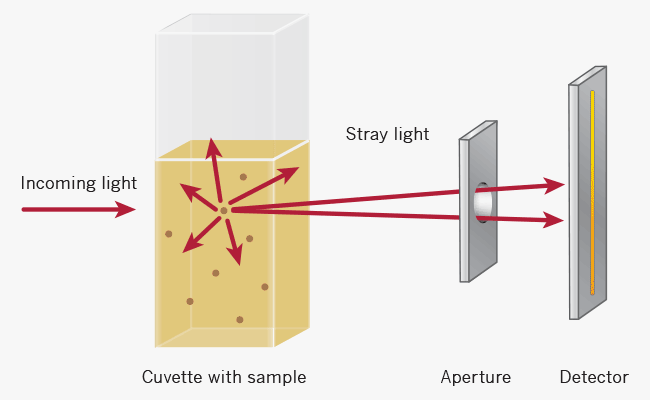
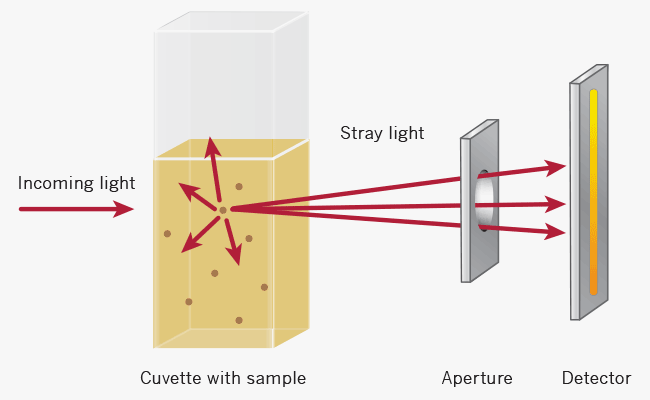
Lower absorbance reading
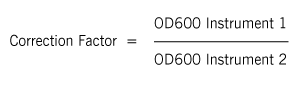
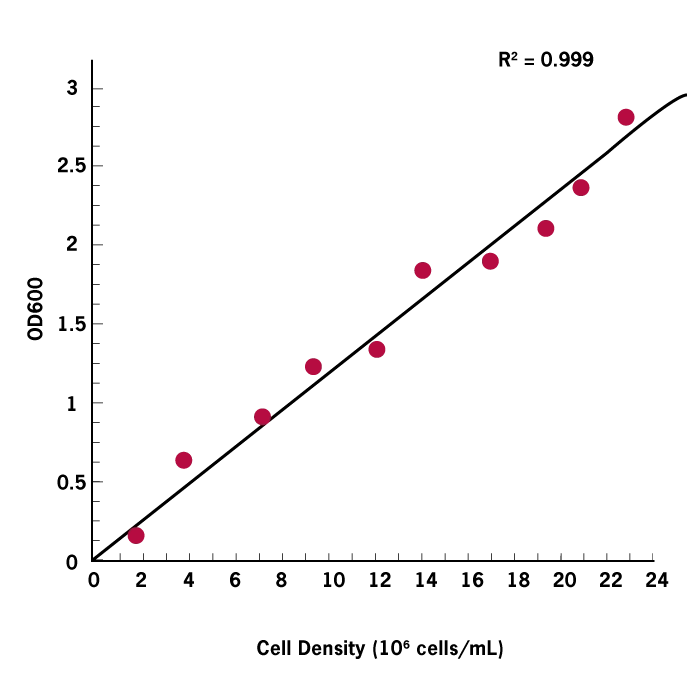
A calibration curve can be constructed by comparing measured OD600 to expected OD600 over a range of different concentrations. Expected OD600 is determined by counting cell number using an alternative technique (for example microscope slide method) and converting to OD600 using the rule of thumb that 1 OD 600 = 5 x 10⁸ cells/ml for E. coli.
OD600 vs Cell Concentration (Cells/mL)
- Organism size and shape
- Growth conditions
- Spectrophotometer configuration
Understanding the Linear Range of OD600 Measurements
Every spectrophotometer has a working range over which OD600 measurements remain approximately linear. At low to moderate cell densities, OD600 values generally increase proportionally with microbial cell concentration.
As cultures become denser, this relationship gradually becomes less linear because of increased light scattering and multiple scattering events within the sample.
The linear range of the instrument is therefore critical for reliable microbial growth monitoring, fermentation workflows, and protein expression experiments. Instruments with extended linear range allow researchers to follow culture growth longer before sample dilution becomes necessary.
When OD600 values exceed the instrument’s reliable range:
- Measurements become less accurate
- Small differences in cell concentration become harder to detect
- Growth rates may be underestimated
- Sample-to-sample comparisons become less reliable
In these situations, samples should be diluted before measurement. The measured OD600 value can then be multiplied by the dilution factor to estimate the original culture density.
Please note that highly heterogeneous cultures or samples containing large numbers of dead cells may also affect OD600 linearity and reproducibility.
Extending OD600 Measurement Range with DiluCell™
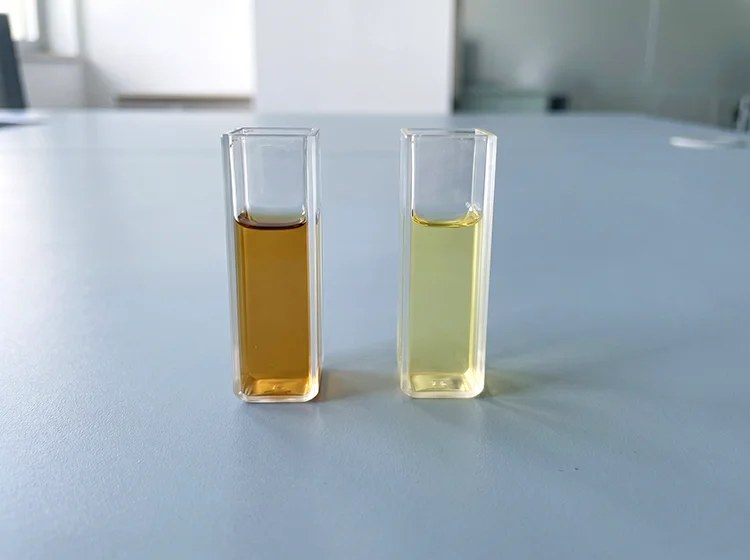
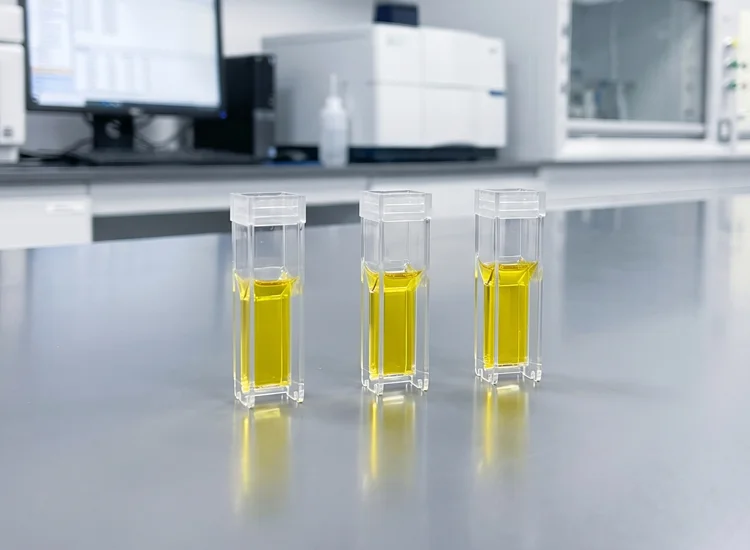
To reduce the required volume for the OD600 measurement and to avoid time-consuming and error-prone manual dilutions, special cuvettes are available for the researcher. DiluCell™ allows for lower sample volume requirements and provides automatic virtual sample dilution.
Due to the unique design of DiluCell™ cuvettes, the light-path is reduced from the standard 10 mm to 1.0 mm (DC 10). According to the Beer-Lambert Law, this shortened pathlength results in an automatic sample dilution by factor 10 (DC 10). Automatic dilution with DiluCell™ saves time and reduces dilution errors and cross-contamination.
What Can Affect OD600 Measurement Accuracy?
Cell Settling
Bacterial and yeast cells settle quickly in liquid culture. If samples are not mixed properly before measurement, OD600 readings may not accurately reflect the true culture density.Air Bubbles and Foam
Air bubbles scatter light and can artificially increase OD600 readings. Foaming samples should be mixed carefully and loaded slowly to reduce measurement variability.Instrument Differences
OD600 values can vary between spectrophotometers because optical geometry, pathlength, slit configuration, and detector setup influence light scattering measurements.Dirty Cuvettes or Optics
Fingerprints, residue, scratches, or contaminated optical surfaces can alter light transmission and reduce measurement reproducibility.High Cell Density
Very dense cultures may exceed the linear range of the spectrophotometer. In these cases, dilution may be necessary for accurate OD600 measurements.Dead Cells and Debris
OD600 cannot distinguish live cells from dead cells or particulate debris. Non-viable material may still scatter light and contribute to the reported reading.Limitations of OD600 Measurements
Because OD600 values can vary between instruments and organisms, measurements are generally best used for relative growth monitoring within consistent experimental conditions rather than absolute cell quantification.
For precise cell counting, complementary methods such as colony counting, flow cytometry, or direct microscopic analysis may sometimes be required.
- Cell size and morphology
- Culture composition Instrument optics and pathlength
- Dead cells and debris
- High-density cultures outside the linear range
OD600 Frequently Asked Questions
Why is OD measured at 600 nm?
Can OD600 distinguish live and dead cells?
What OD600 value corresponds to log phase growth?
Can OD600 be measured with a microvolume or cuvette spectrophotometer?
What is a good OD600 value for induction?
Why do OD600 values differ between spectrophotometers?
Can OD600 be used for yeast cultures?
Does OD600 measure cell viability?
Why are cuvettes preferred for OD600 measurements?
What happens if OD600 is too high?
Can OD600 measurements replace direct cell counting?
Recommended Instruments for OD600 Measurements
- Bacterial growth monitoring
- Cell density measurements
- Fermentation workflows
- Protein expression studies
- Growth curve generation
- QC and routine microbiology analysis