


Reading an Accurate Blank

Why blanking matters in UV/Vis spectroscopy

Blanking a spectrophotometer may feel routine, but it is one of the most important steps in any UV/Vis workflow. A blank reading establishes the background correction used for every sample measurement that follows. When the blank is inaccurate, contaminated, or poorly prepared, every subsequent absorbance result can be affected.
For nucleic acid, protein, and ultra-low concentration measurements, a clean and accurate blank is essential for reliable concentration and purity results.

What does a blank do?

During a UV/Vis measurement, the spectrophotometer records the light intensity that passes through the sample. The instrument compares this transmitted light to the initial light intensity and calculates absorbance using the Beer-Lambert relationship.

In practical terms, the blank tells the instrument what “zero” should look like. The blank spectrum is stored as the background and subtracted from later sample readings.

That means your sample result depends not only on the sample itself, but also on the quality of the blank.

Why a bad blank causes bad data

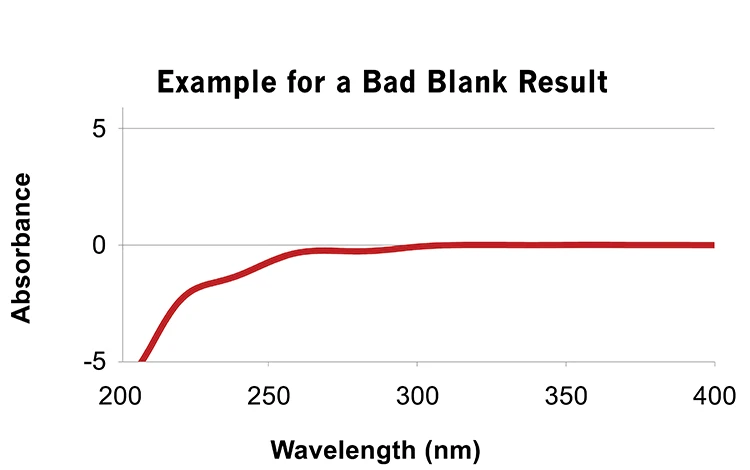
A compromised blank can introduce false peaks, negative absorbance, distorted spectra, or incorrect concentration values.

Common causes include contaminated water or buffer, residue on the measurement window or mirror, air bubbles from pipetting, foam-forming detergents in buffers, aging or chemically changed buffer solutions, and residual alcohol after cleaning.

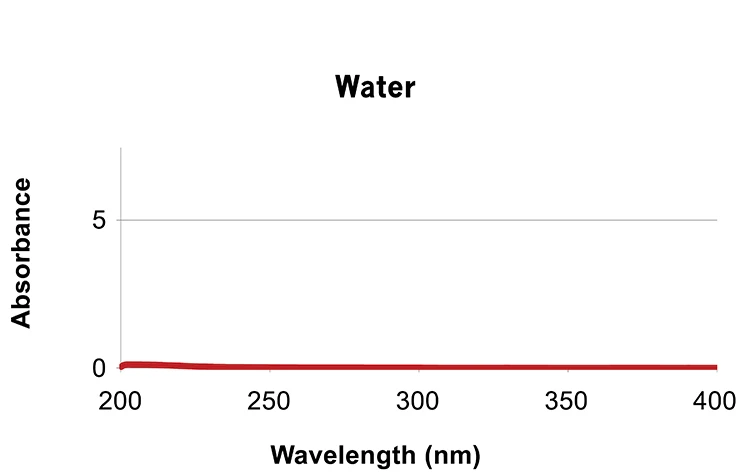
A good blank should produce a flat, horizontal baseline when the blank solution is measured again as a sample.

reading accurate blank water
reading accurate blank negative
Prof. Beer's Insight
Reliable measurements begin long before the sample is read. A clean, accurate blank defines the baseline for everything that follows.

Best-practice blanking workflow

    1. Start with fresh deionized water
Apply 1–1.5 µL of fresh deionized water to the measurement window and run a blank. Avoid water from open containers, even if labeled RNase-free.
    2. Check the water as a sample Remove the blank with a clean, dry wipe. Apply fresh water again and measure it as a sample. The result should be a flat baseline.
    3. Measure your buffer as a sample
Apply the buffer and check whether it absorbs in the wavelength range of interest. If the buffer produces peaks near your sample’s target wavelength, it may not be suitable.
    4. Blank with buffer only after verification
Once the buffer is confirmed not to interfere, record it as the blank. Then reapply fresh buffer and measure it as a sample to confirm a flat baseline.
    5. Use fresh tips and reverse pipetting
Use a new pipette tip at every step. Reverse pipetting helps reduce bubbles and foam, especially with small volumes, proteins, nucleic acids, detergents, or foaming buffers.

Preventing Measurement Interference and Contamination

Buffers and reagents to watch carefully

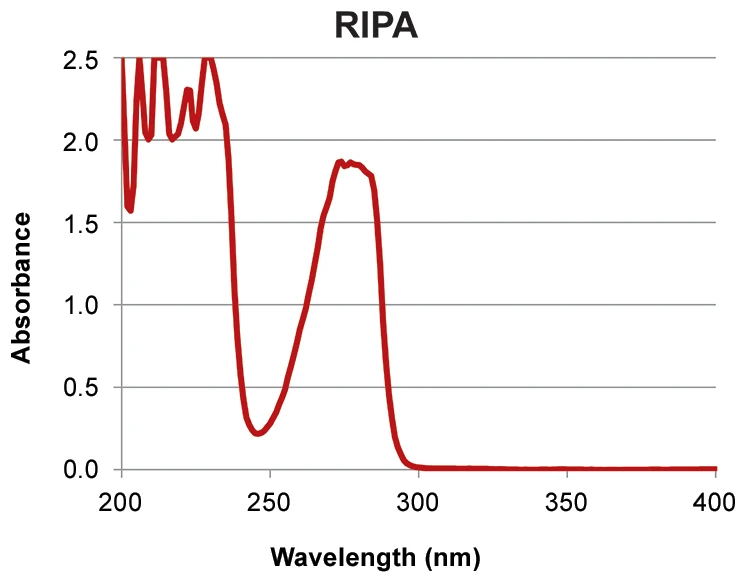
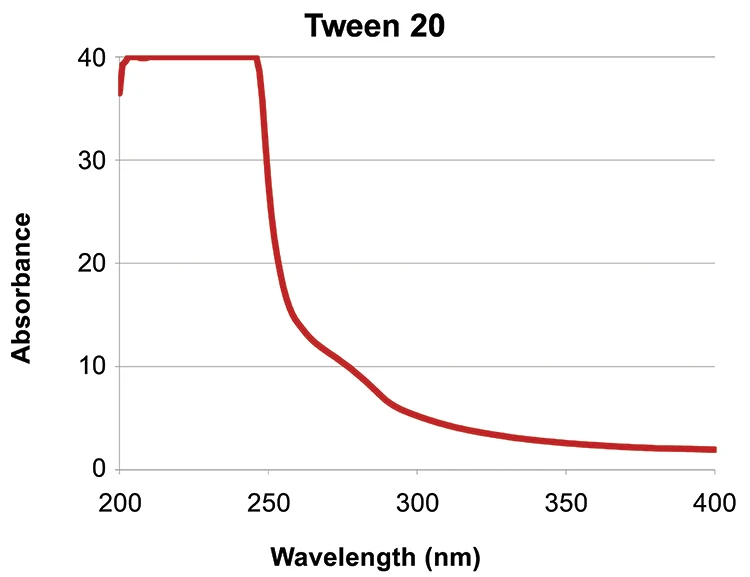
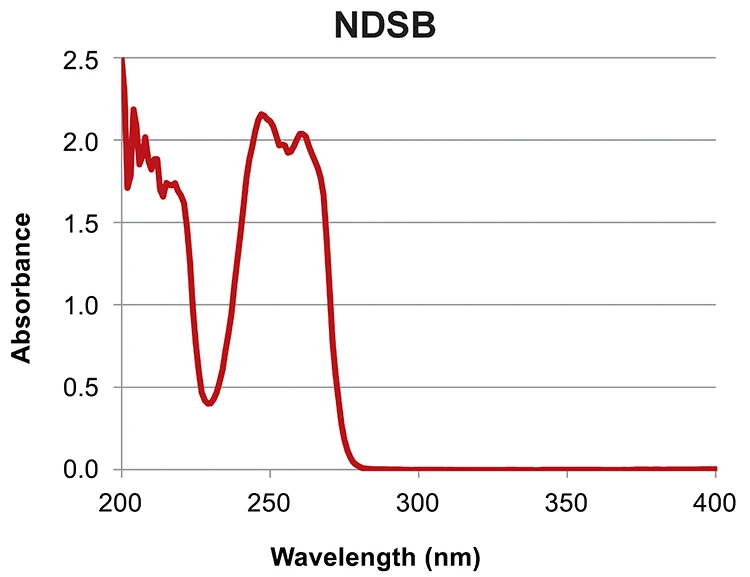
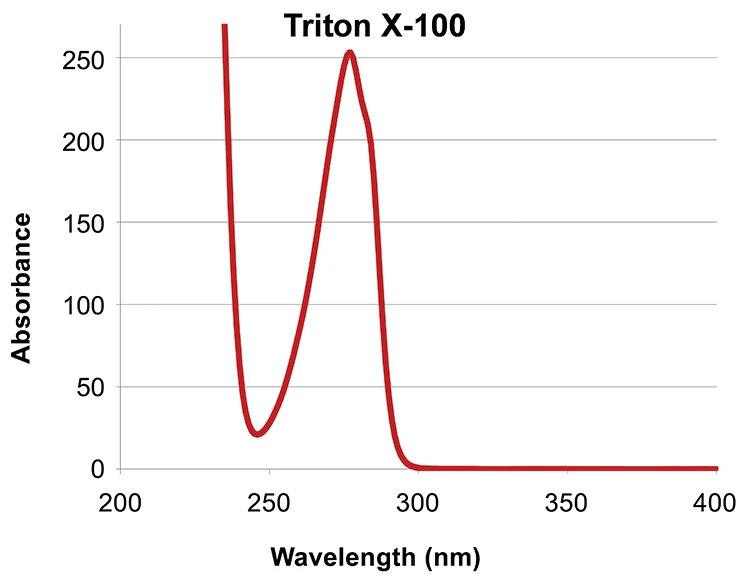
Some buffer components absorb strongly in the UV range and can interfere with protein or nucleic acid measurements. These include RIPA, Tween 20, NDSB, and Triton X-100.

If these substances create absorbance peaks in the wavelength range of interest, they may compromise your measurement.

Cleaning the measurement surfaces

Clean the measurement window and mirror with a moistened wipe first, then dry thoroughly. For stubborn contamination, use a 70/30 alcohol/water solution, followed by a water-moistened wipe and then a dry wipe.

Do not leave alcohol residue behind, because alcohol can absorb in the higher UV range.

reading accurate blank RIPA
reading accurate blank Tween20
reading accurate blank NDSB
reading accurate blank Triton-X-100

Small Steps That Improve Measurement Reliability

Reverse pipetting:
when and why to use it

Reverse pipetting is recommended for small-volume UV/Vis measurements because it helps reduce air bubbles and foam. It is especially useful for protein, nucleic acid, detergent-containing, or viscous samples.

The most important
measurement of the day

A blank serves as the reference point for every result that follows. Taking time to prepare, verify, and clean before blanking helps prevent inaccurate readings and protects the reliability of an entire day’s measurements.
Scroll to Top