




Forward pipetting and reverse pipetting are two common liquid-handling techniques. Choosing the right method helps improve accuracy, reduce bubbles, and protect sensitive measurement surfaces.
Best for:
Reverse pipetting is useful when working with liquids that are difficult to dispense accurately, especially samples with low surface tension or high vapor pressure, such as highly volatile liquids. However, reverse pipetting is also suitable for aqueous solutions and is therefore the preferred technique for highly accurate pipetting and sample analysis.
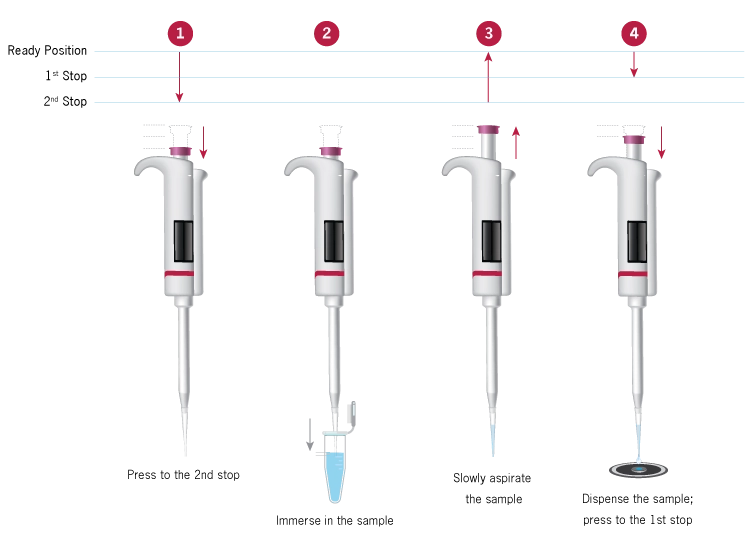
In reverse pipetting, slightly more liquid is aspirated than is dispensed. The extra liquid remains in the tip and is discarded afterward.
Important: The residual liquid left in the tip is intentional. Expelling it can affect delivery accuracy and introduce bubbles onto the measurement window.
| Feature | Forward Pipetting | Reverse Pipetting |
|---|---|---|
| Dispensing method | Full dispense | Dispense to first stop only |
| Residual liquid in tip | Expelled | Left in tip |
| Best for | Standard liquids | Volatile, foaming, or viscous samples |
| Bubble risk | Higher with difficult liquids | Lower |
| Accuracy with volatile samples | Less reliable | More reliable |
Both methods have an important place in the laboratory. While forward pipetting remains common for routine liquid handling, reverse pipetting is generally preferred when accuracy and consistency are important, particularly for volatile, viscous, or foam-prone samples.
Because reverse pipetting also performs reliably with standard aqueous solutions, it can serve as a broadly applicable method across a wide range of pipetting tasks.
Understanding when to use each technique can improve measurement accuracy, reduce variability, and help protect sensitive analytical surfaces from contamination or sample disruption.