Implen Prof Beer's Journal Club | March Issue, 2026Explore March 2026 Featured Research Highlights |
|
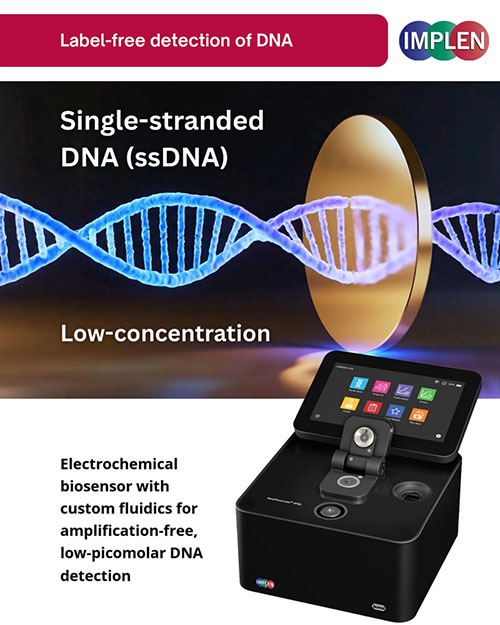
Label-free microfluidic detection of low-concentration DNAIn a 2025 study, a group at @University of Naples Federico II identified the need for robust, label-free detection of low-concentration single-stranded DNA (ssDNA) as an alternative to PCR and electrochemical biosensors. By integrating screen-printed gold electrodes with a 3D-printed fluidic cell, they present a platform which enables modular, label-free, amplification-free detection of picomolar DNA in buffer solutions and biological samples. A NanoPhotometer® was used to measure DNA concentration for downstream immobilizaton of ssDNA on electrodes. Overall, their findings provide a potential low-cost, less complex alternative to standard nucleic acid detection methods. #Implen #NanoPhotometer #Spectrophotometer #DNAQuantification #AnalyticalChemistry
|
|
Proteomics-based identification and resistance detection of ESKAPE pathogensAntimicrobial resistance (AMR) makes treating bacterial infections increasingly difficult, and current diagnostics rely on separate methods for antimicrobial susceptibility testing and species identification. Researchers at the @Robert Koch Institute evaluated a proteomics-based workflow that can identify bacterial species and predict AMR phenotypes from primary cultures within about two hours. The NanoPhotometer® NP80 was used to quantify bacterial protein concentration, then used again downstream to quantify peptides after protein digestion with trypsin. Testing 126 clinical isolates across 16 species showed high performance, with 100% specificity and 94.4% sensitivity for AMR detection. The findings suggest that proteomics could become a powerful diagnostic tool in clinical microbiology by enabling rapid, accurate bacterial phenotyping in a single measurement. #Implen #NanoPhotometer #Spectrophotometer #ProteinQuantification #Microbiology
|
|
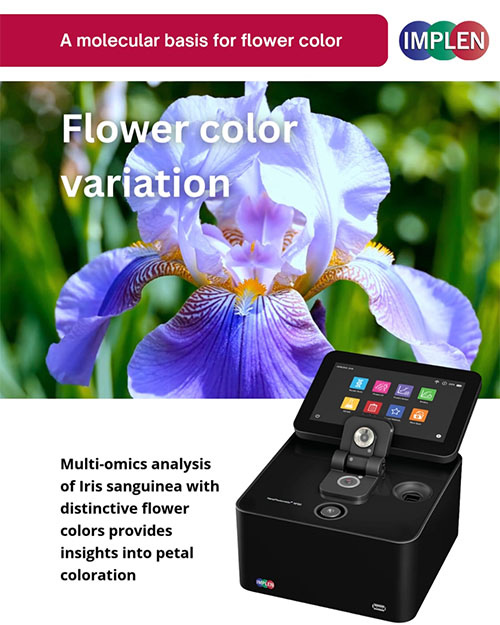
A molecular basis for flower color variationA 2024 study investigates the molecular basis of flower color variation in Iris sanguinea using a combined multi-omics approach. The researchers found that differences in petal color are attributed to the accumulation of anthocyanin pigments, which is driven by the differential expression of genes involved in the flavonoid biosynthesis pathway. The researchers used a NanoPhotometer® to assess RNA quality. Overall, the study provides a gene-metabolite framework explaining flower coloration and offers insights into ornamental plant breeding and genetic improvement. #Implen #NanoPhotometer #Spectrophotometer #RNAQuantitation #Research
|


|
Explore more publications where the NanoPhotometer® helped researchers make groundbreaking discoveries.
©2026 Implen. All rights reserved. |